Surface Webb Where Code Meets the Cutting Edge

Surface Webb

Where Code Meets the Cutting Edge

Latest Articles

Your Code Is Perfect. Your Users' World Is Not.
Web Development

Your Code Is Perfect. Your Users' World Is Not.

You've profiled every frame, squashed every memory leak, and your spatial app runs like a dream in the lab. Then it hits real users and falls apart. Here's what your development environment isn't telling you—and how to actually fix it.
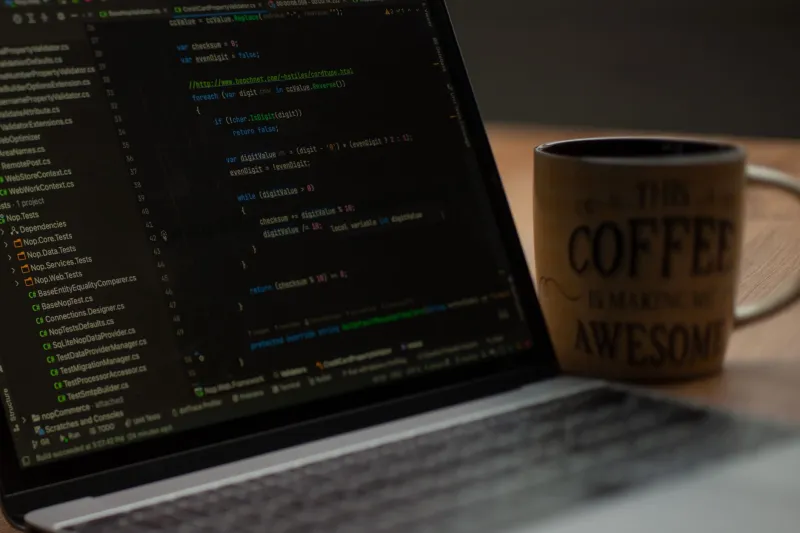
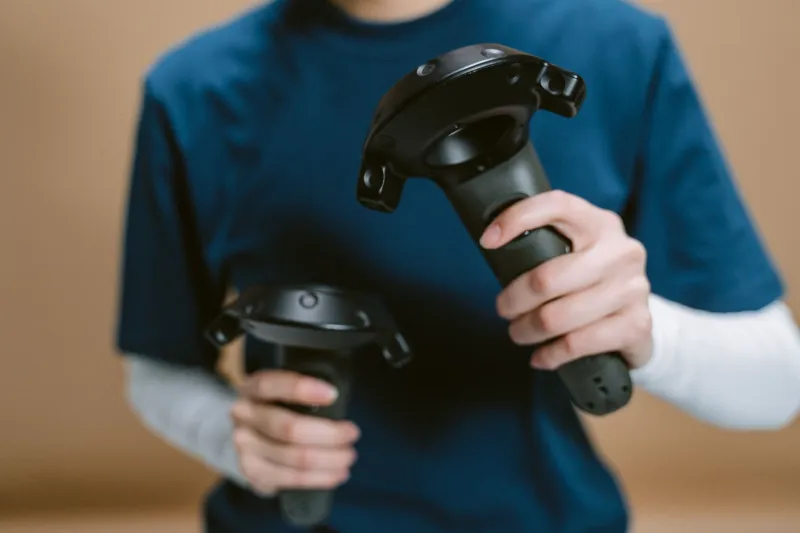
Debugging Blind: How Your Mouse Is Lying to You About Your Spatial App
Web Development

Debugging Blind: How Your Mouse Is Lying to You About Your Spatial App

If you're building spatial web experiences but debugging them with a trackpad and a right-click menu, you're working with a massive blind spot. Here's why pointer-centric dev tools are quietly sabotaging your gesture-first apps — and what you can actually do about it.

Controller Specs Are a Fantasy: The Real Drift and Jitter Problems Wrecking Your Spatial App
Web Development

Controller Specs Are a Fantasy: The Real Drift and Jitter Problems Wrecking Your Spatial App

Manufacturers promise sub-millimeter precision, but real-world motion controllers tell a very different story. If your spatial web app feels janky even after you've optimized everything else, the problem might be hiding inside the hardware spec sheet itself.

Vibrations Are Lying to You: The Psychology Behind Haptic Feedback in Spatial Apps
Web Development

Vibrations Are Lying to You: The Psychology Behind Haptic Feedback in Spatial Apps

Haptic feedback is one of the most powerful — and most misunderstood — tools in a spatial app developer's kit. It can make a clunky interaction feel polished, but it can also paper over design problems that will eventually catch up with you. Here's what's really going on under the hood.

Your App Passes Every Benchmark and Users Still Hate Touching It
Web Development

Your App Passes Every Benchmark and Users Still Hate Touching It

Your telemetry looks clean. Input latency is under 20ms. So why are users describing your spatial app as 'clunky' and 'laggy'? The answer lives in the gap between what your profiler measures and what the human nervous system actually experiences.

FPS Is Lying to Your Face: The Real Metrics Behind Spatial Web Performance
Infrastructure & Performance

FPS Is Lying to Your Face: The Real Metrics Behind Spatial Web Performance

Your frame rate dashboard looks great. Your users think your app feels broken. There's a reason for that disconnect—and it has nothing to do with GPU utilization. Here's what spatial web developers are actually getting wrong about performance measurement.

Scaling to 500 Users Shouldn't Break Everything: The Hidden Memory Crisis in Spatial Web Apps
Infrastructure & Performance

Scaling to 500 Users Shouldn't Break Everything: The Hidden Memory Crisis in Spatial Web Apps

Your spatial app runs beautifully in development, then mysteriously implodes the moment real users show up in numbers. The culprit isn't your code logic — it's a chain of memory failures hiding just below the surface that most developers never see coming until it's too late.

Who Gets Left Behind: The Accessibility Gap Nobody in Spatial Web Dev Wants to Talk About
Web Development

Who Gets Left Behind: The Accessibility Gap Nobody in Spatial Web Dev Wants to Talk About

Gesture-first interfaces and immersive 3D environments look incredible in demos, but they're quietly shutting out roughly one in four Americans with some form of disability. Here's why the spatial web has an accessibility crisis on its hands — and what developers can actually do about it.

Frame Rate Looks Fine, So Why Does Your Spatial App Feel Like Molasses?
Infrastructure & Performance

Frame Rate Looks Fine, So Why Does Your Spatial App Feel Like Molasses?

Your profiler says 60fps. Your users say it feels awful. The culprit isn't where you're looking. We dig into the sneaky, non-obvious performance killers in spatial web apps—from bloated scene graphs to physics engine misconfigurations—that never show up on the obvious dashboards until your reviews tank.

Building a Gesture Vocabulary That Actually Makes Sense to Users
Web Development

Building a Gesture Vocabulary That Actually Makes Sense to Users

Gesture design in spatial computing is less like button layout and more like teaching users a new language — one they have to pick up on the fly. Here's how to build a gesture vocabulary that feels instinctive from the start, without blowing your budget on headset-based testing.

3D Apps Are Quietly Eating Your RAM: A Developer's Guide to Plugging the Leaks
Web Development

3D Apps Are Quietly Eating Your RAM: A Developer's Guide to Plugging the Leaks

Spatial web apps carry a memory burden that flat web experiences never had to deal with — multiple rendering contexts, live gesture tracking, and environmental mapping all competing for the same finite resources. If you've ever watched your WebXR app balloon to 2GB of RAM mid-session, this one's for you. Here's how to find the leaks, understand why they happen, and cut your memory footprint without trashing visual quality.

20 Milliseconds to Ruin Everything: The Hidden Latency Tax Destroying Your Spatial Web App
Infrastructure & Performance

20 Milliseconds to Ruin Everything: The Hidden Latency Tax Destroying Your Spatial Web App

In spatial web apps, lag isn't just an annoyance—it's a immersion killer that compounds across every gesture, frame, and hand-tracked movement. Here's what the real latency budgets look like, where the thresholds actually are, and what you can do about it before your users start feeling sick.

Lost in Translation: Why Spatial Apps Are Speaking a Gesture Language Nobody Taught Users
Web Development

Lost in Translation: Why Spatial Apps Are Speaking a Gesture Language Nobody Taught Users

Developers are racing to build gesture-driven spatial interfaces, but without a shared vocabulary, users are left guessing what their hands are supposed to do. The inconsistency problem is real, it's frustrating users, and it's quietly killing retention. Here's how to build gesture systems that actually make sense.

Smooth Animations Are Costing You More Than You Think: A Spatial Web Performance Budget Breakdown
Infrastructure & Performance

Smooth Animations Are Costing You More Than You Think: A Spatial Web Performance Budget Breakdown

Hitting 60fps in a traditional browser feels like a win — but in spatial computing environments, that same animation could be quietly draining your compute budget and tanking user experience on mixed reality devices. We break down the real math behind performance budgets when your app needs to live in both flat and three-dimensional worlds.

When 'Inspect Element' Doesn't Exist: Debugging Strategies for the Spatial Web
Web Development

When 'Inspect Element' Doesn't Exist: Debugging Strategies for the Spatial Web

The spatial web is no longer a concept — it's shipping code. But when your interface floats in physical space and your users interact with gestures instead of clicks, your entire debugging toolkit falls apart. Here's how forward-thinking developers are building new strategies from scratch.

WebAssembly Is Eating Native: What WASM-Powered Graphics Mean for the Future of the Browser
Infrastructure & Performance

WebAssembly Is Eating Native: What WASM-Powered Graphics Mean for the Future of the Browser

WebAssembly has quietly crossed a threshold—it's no longer just a performance trick for compute-heavy tasks. Paired with modern graphics APIs, WASM is enabling developers to port fully native 3D applications, physics engines, and visual computing workloads directly to the browser with near-native speed. Here's what that actually looks like in practice and when it makes sense to go down this road.

Cross-Browser WebXR Is Broken and Here's What You Can Actually Do About It
Web Development

Cross-Browser WebXR Is Broken and Here's What You Can Actually Do About It

Building an AR experience that runs great in Chrome and completely falls apart in Safari is one of the most frustrating rites of passage in spatial web dev. We dug into why WebXR debugging is still such a mess across browsers and devices—and what tools and tactics can save your team weeks of pain.

Heatmaps Don't Work in Three Dimensions: Rethinking Analytics for Spatial Web Experiences
Web Development

Heatmaps Don't Work in Three Dimensions: Rethinking Analytics for Spatial Web Experiences

Your scroll depth metrics and click-through rates mean nothing when users are reaching, rotating, and dwelling in three-dimensional space. As spatial web experiences go mainstream, developers urgently need new frameworks for measuring what engagement actually looks like in a volumetric world.

So You Shipped a Surface App: The Production Chaos Nobody Warned You About
Infrastructure & Performance

So You Shipped a Surface App: The Production Chaos Nobody Warned You About

Getting a surface computing app to wow a room in a demo is one thing. Keeping it stable, responsive, and battery-friendly when real users get their hands on it is an entirely different beast. Here's what actually goes wrong when spatial apps leave the lab — and how to survive it.

Stop Thinking Flat: A Developer's Practical Roadmap to Building 3D-First Web Experiences
Web Development

Stop Thinking Flat: A Developer's Practical Roadmap to Building 3D-First Web Experiences

The spatial web isn't some distant sci-fi promise anymore—it's showing up in your browser right now, and developers who keep thinking in pixels and scroll positions are already falling behind. From Three.js to Apple's spatial APIs, the tooling has finally caught up to the vision. Here's how to actually start building for it without losing your mind.